
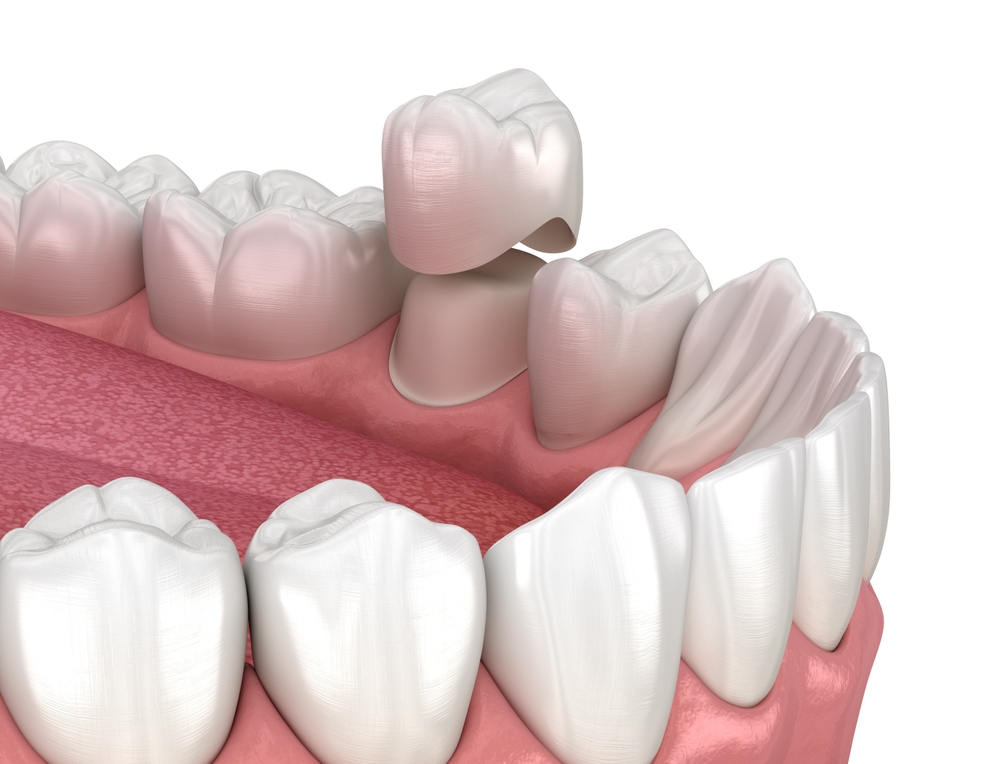
Understanding Dental Crowns
A crown acts like a protective cap that covers a tooth from the gum line up. Think of it as armor for a tooth that’s been compromised by decay, cracks, large fillings, or root canal treatment. The crown surrounds the entire visible portion of the tooth, reinforcing it so you can use it normally without worrying about further damage.
Crowns serve multiple purposes. They protect weakened teeth from breaking apart during everyday activities like chewing. They restore teeth that are too damaged for regular fillings to handle effectively. They also improve appearance when a tooth is severely discolored or misshapen in ways that bonding can’t address.
The process typically requires two visits. During the first appointment, the dentist prepares the tooth by removing damaged areas and reshaping it to fit the crown. Digital scans or impressions capture the exact dimensions needed. You’ll receive a temporary crown to wear while the permanent one is being crafted. At the second visit, the custom crown gets cemented into place, and the dentist makes any necessary adjustments to ensure your bite feels natural.
How Dental Bridges Work
Bridges literally bridge the gap created by one or more missing teeth. A traditional bridge uses crowns on the teeth adjacent to the gap (called abutment teeth) with one or more artificial teeth (pontics) suspended between them. The entire structure becomes a single, fixed unit that doesn’t come out.
Why Replace Missing Teeth
Gaps in your smile create problems beyond aesthetics. Neighboring teeth tend to drift into empty spaces, tilting or rotating out of their proper positions. This movement can throw off your bite alignment, making certain teeth work harder than they should. The teeth opposite the gap can also over-erupt, emerging further from the gum because they lack the resistance they’re meant to push against.
Bone loss occurs where teeth are missing because the jawbone needs stimulation from tooth roots to maintain its density. Over time, this bone deterioration can change facial contours and make future tooth replacement options more complicated.
Types of Restorations Available
Traditional crowns and bridges in Des Plaines come in several materials, each with specific advantages. Porcelain fused to metal offers strength with reasonable aesthetics. All-ceramic or all-porcelain options provide the most natural appearance, making them ideal for front teeth. Gold alloys are extremely durable and gentle on opposing teeth, though their color makes them more noticeable.
The best choice depends on which tooth needs restoration, how much biting force that area experiences, and what matters most to you regarding appearance and longevity. The team discusses these factors during your consultation, helping you understand the trade-offs involved.
The Treatment Process
Everything starts with a thorough examination. The dentist checks the condition of teeth that might receive crowns, evaluates the health of teeth adjacent to gaps, and takes Digital X-rays to assess what’s happening below the gum line. This information determines whether crowns or bridges are appropriate or if you might need preliminary treatments like gum therapy or root canals.
Tooth preparation requires precision. The dentist removes just enough structure to accommodate the restoration while preserving as much healthy tooth as possible. For bridges, this means preparing the abutment teeth on either side of the gap. Accurate impressions or digital scans ensure the final restoration fits precisely and matches your natural bite.
Temporary restorations protect prepared teeth and maintain spacing while the lab fabricates your permanent crowns or bridges. These temporaries aren’t as strong as the final version, so you’ll need to avoid sticky foods and chew carefully on the opposite side of your mouth.
Caring for Crowns and Bridges in Des Plaines
Crowns and bridges can last 10-15 years or longer with proper maintenance. Brush twice daily and floss around crowns just like natural teeth. For bridges, special floss threaders or interdental brushes help you clean underneath the pontic where food particles can accumulate.
Regular dental visits allow the team to monitor your restorations and catch small issues before they become major problems. The dentist checks for signs of wear, ensures margins remain sealed against the tooth, and verifies that your bite hasn’t shifted in ways that put excessive pressure on the restoration.
Avoid habits that stress your teeth unnecessarily. Chewing ice, opening packages with your teeth, or grinding your teeth at night can damage crowns and bridges. If you clench or grind, a nightguard protects while you sleep.
When to Consider These Solutions
Several situations make crowns the right choice. Teeth with large fillings that occupy more than half the tooth structure often need crowns for reinforcement. Teeth that have undergone root canal therapy become brittle and require crowns to prevent fractures. Severely worn teeth benefit from crowns that restore proper height and chewing surface.
Bridges work well when you have healthy, strong teeth on both sides of a gap and want a fixed solution rather than a removable partial denture. They’re particularly effective for replacing one to three consecutive missing teeth in areas that don’t experience extreme biting forces.
Your teeth perform critical functions every single day. Restoring damaged teeth and replacing missing ones protects your investment in oral health while giving you back full chewing ability. Contact Apple Family Dental in Des Plaines to find out how crowns and bridges can solve your specific dental challenges and get your smile functioning the way it should.