
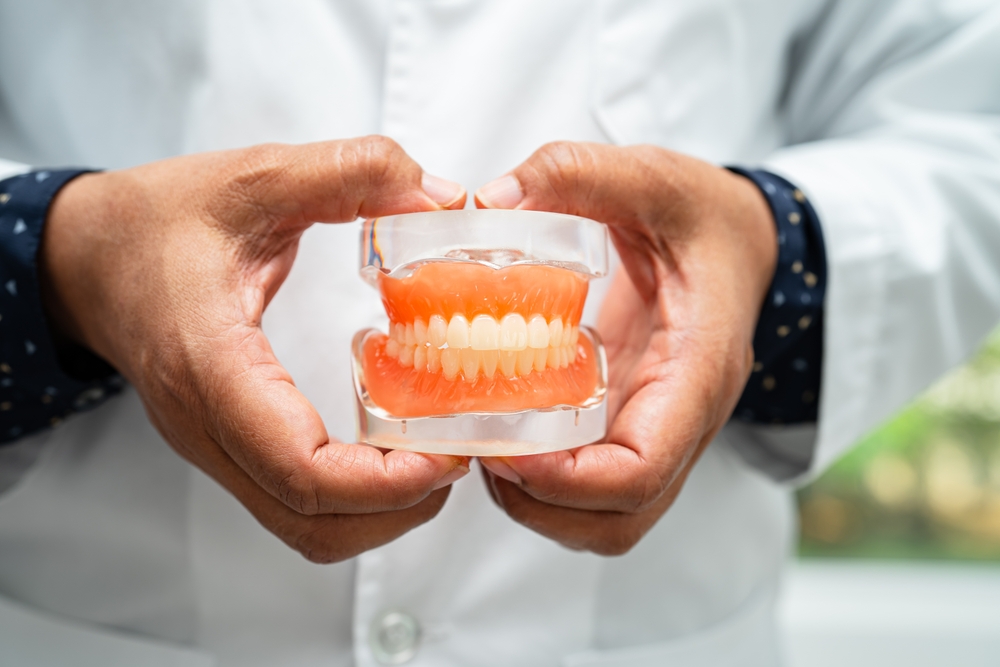
Full Dentures vs. Partial Dentures
Full dentures replace an entire arch of teeth—either upper, lower, or both. They rest directly on your gums and stay in place through suction and, in some cases, denture adhesive. People who have lost most or all of their teeth due to decay, gum disease, or injury typically benefit from this option.
Partial dentures fill in gaps when you still have some healthy, natural teeth remaining. They consist of replacement teeth attached to a gum-colored base, with metal or tooth-colored clasps that anchor onto your existing teeth. This prevents your remaining teeth from shifting out of position while restoring your ability to chew effectively.
The type that works best for you depends on how many teeth you’re missing and their location. During your consultation, the dental team evaluates your oral health, discusses your goals, and recommends the most appropriate option.
The Fitting Process
Getting dentures and partial dentures in Des Plaines involves several appointments to ensure proper fit and appearance. First, the team takes detailed impressions of your mouth using digital scanning technology. These precise measurements form the foundation for creating dentures that fit comfortably and look natural.
You’ll also work with the dentist to select the shade and shape of your replacement teeth. The goal is to match your facial structure and create results that look authentic, not artificial. If you have old photos showing your natural smile, bringing them along can help guide these decisions.
Once your dentures are fabricated, you’ll return for a fitting appointment. The dentist checks how they sit in your mouth, evaluates your bite, and makes any necessary adjustments. Some fine-tuning is normal—every mouth is unique, and achieving the perfect fit sometimes requires a few modifications.
What to Expect During the Adjustment Period
New dentures feel strange at first. Your mouth needs time to adapt to having something new resting against your gums and palate. You might experience increased saliva production, minor soreness, or difficulty speaking clearly during the first few weeks. These issues typically resolve as your muscles and tissues adjust.
Eating requires some patience initially. Start with soft foods cut into small pieces, and chew slowly using both sides of your mouth to keep your dentures stable. As you gain confidence, you can gradually reintroduce firmer foods. Some items, like sticky candies or very hard foods, might remain challenging even after you’ve fully adapted.
Speaking can feel awkward at first, especially when pronouncing certain sounds. Practice reading aloud at home to help your tongue and muscles learn to work with your dentures. Most people regain normal speech patterns within a few weeks.
Caring for Your Dentures
Proper maintenance keeps your dentures looking good and functioning well for years. Remove and rinse them after eating to clear away food particles. Brush them daily with a soft-bristled brush and non-abrasive denture cleaner—regular toothpaste is too harsh and can create tiny scratches that harbor bacteria.
Soak your dentures overnight in a denture-cleaning solution. This keeps them moist and helps them maintain their shape. Never use hot water, which can warp the material and ruin the fit.
Even without natural teeth, you still need to care for your gums, tongue, and any remaining teeth. Brush your gums gently with a soft brush each morning before inserting your dentures. This stimulates circulation and removes plaque.
When Dentures Need Adjustments or Replacement
Your mouth changes over time. Gums and bone tissue naturally recede, which means dentures that once fit perfectly can become loose. If you notice your dentures slipping, clicking when you talk, or causing sore spots, schedule an appointment. The dentist can reline them to restore proper fit.
Most dentures last between five and seven years before they need replacement. Worn teeth, cracks in the base material, or significant changes in your mouth structure signal it’s time for a new set. Regular dental visits help catch these issues early.
Options Beyond Traditional Dentures
Implant-supported dentures offer enhanced stability for people who want something more secure than conventional dentures. Small titanium posts surgically placed in your jawbone act as anchors, and your dentures snap onto these attachments. This eliminates worrying about slippage and often allows for better chewing ability.
The team can discuss whether this option makes sense based on your bone density, overall health, and budget. Not everyone qualifies as a candidate, but for those who do, implant-supported dentures provide excellent long-term results.
Regain Your Confidence
Missing teeth shouldn’t hold you back from enjoying meals with family, laughing freely, or feeling good about your appearance. Dentures and partial dentures restore both function and aesthetics, giving you back the freedom to live without self-consciousness.
Call Apple Family Dental now to schedule your denture consultation in Des Plaines. The team will evaluate your needs, answer your questions, and create a plan to rebuild your smile.